
I Ching Online
Toss three coins six times and build your hexagram from the bottom up.
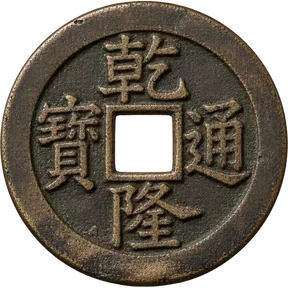
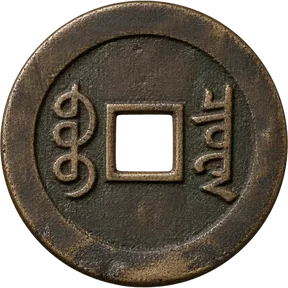
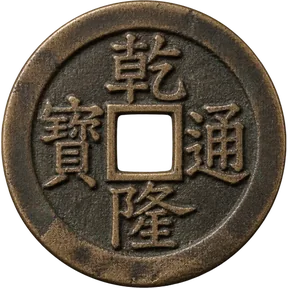
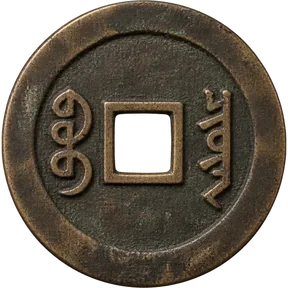
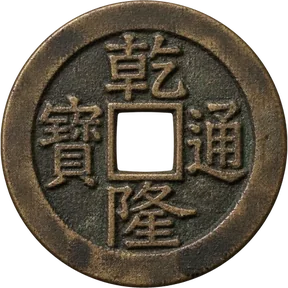
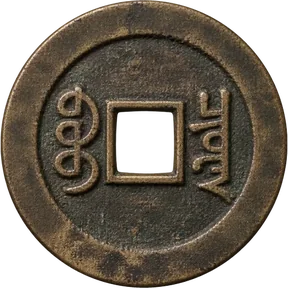
Line 1 of 6
Toss six times. The lines build from the bottom up into one hexagram. Press Toss the coins to begin.
How the three coins are counted
The face, the side with four Chinese characters, counts 2. The back counts 3. Add the three coins and each toss gives 6, 7, 8 or 9. Toss six times from the bottom up: the first toss is line 1 and the last is line 6.
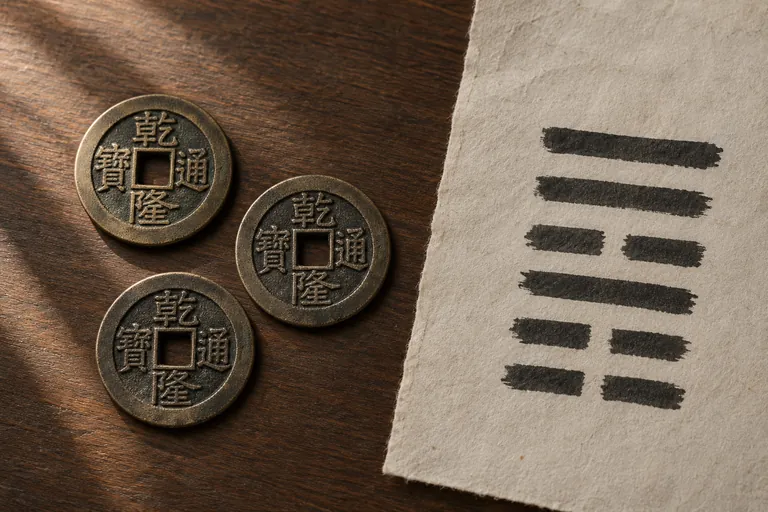
| Coins | Total | Name | Drawn as | Chance |
|---|---|---|---|---|
| Three backs | 9 | Old yang | Solid, changing | 1 in 8 |
| Two backs, one face | 8 | Young yin | Broken | 3 in 8 |
| One back, two faces | 7 | Young yang | Solid | 3 in 8 |
| Three faces | 6 | Old yin | Broken, changing | 1 in 8 |
9 and 6 are changing lines. Each flips into its opposite, which turns the primary hexagram into the relating hexagram. With three fair coins, 9 and 6 each come up one time in eight. The online toss simulates three fair coins with your browser's random number generator; if you throw your own coins, enter what you see using the same table.
Which text to read follows Zhu Xi's rules in the Yixue Qimeng. With no changing line, read the judgment of the primary hexagram. With one, read that line. With two, read both, and the upper one leads. With three, read the judgments of both hexagrams. With four or five, read the unchanged lines of the relating hexagram. With all six, Qian reads its text for the nines, Kun its text for the sixes, and any other hexagram reads the judgment of the relating hexagram.
How this differs from Plum Blossom numbers
Plum Blossom numbers casts with two numbers and the hour and always gives one changing line, with every step of the arithmetic shown. The three-coin method is the most common traditional way to cast. A cast can have no changing lines or all six, and the reading turns on which text applies.
For a single yes or no question, try moon blocks. To learn the hexagrams first, start from all 64 hexagrams.
Questions
Do I need to write a question first?
No. Writing it down makes it easier to read the cast against your own situation, and you can still cast without one. The paid reading works from the question you wrote, or from where you stand overall if you left it blank.
What is a changing line?
A line that came up 6 or 9. It flips into its opposite, which turns the primary hexagram into the relating hexagram. When more lines change, the text you read changes with them.
Several lines are changing. Which one do I read?
The page marks the text to read by Zhu Xi's rules and says which rule applies. If you follow another method, switch on Show every changing line and read them all.
Why is my result different from the Plum Blossom tool?
The two methods build the hexagram from different inputs. Plum Blossom uses two numbers and the hour and always gives one changing line. The coins use six tosses and can give none or all six. Each gives its own hexagram, so read each on its own terms.
Can I cast again?
Cast once for each question. Casting the same question again only adds hexagrams that pull against each other. If something changes, ask again about the new situation.
Where is my cast saved?
In My records on this device. The question you write is also kept as a research record for up to 24 months, with emails, phone numbers and links removed and no IP address, name or payment details attached.