
Learn and practise · 6 lessons · 12 questions
Palm Reading Practice
Start with the position of a crease, then trace its path. These fixed diagrams teach visible shapes and traditional names. Palm lines cannot establish lifespan or health.
Progress stays in this browser. Chinese and English share the same record.
Read the example, then try it
Find the three main lines
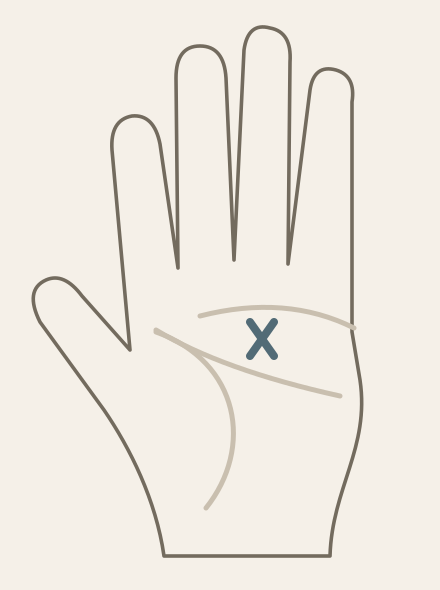
With the fingers pointing up, the heart line crosses the upper palm from the little-finger side. The head line crosses the middle, and the life line curves around the thumb pad toward the wrist. These are the three main lines for this course. The vertical fate line gets its own lesson.
Learning centre and saved progress
Lesson notes and examples
1. Find the three main lines
With the fingers pointing up, the heart line crosses the upper palm from the little-finger side. The head line crosses the middle, and the life line curves around the thumb pad toward the wrist. These are the three main lines for this course. The vertical fate line gets its own lesson.
2. Tell head from heart
Locate the heart line below the fingers, then the head line beneath it across the palm. The head line usually begins near the gap between thumb and index finger and runs toward the outer palm. Use the landmarks and the path; left and right can change with the hand or a mirrored photo.
3. Trace the life line
The life line starts near the thumb-index gap, curves around the Venus mount at the base of the thumb and continues toward the wrist. Identify its arc and the area it encloses. Length or a gap cannot be converted into lifespan, and lighting can make a crease look interrupted.
4. Locate the fate line and leave gaps open
The fate line, also called the career line, usually runs through the center toward the middle finger. Its starting point, length and clarity vary. Some palms or photos have no identifiable fate line. Mark it as unidentified when you cannot trace it, then check a clearer photo.
5. Distinguish mounts, crosses and stars
The Venus mount is the thumb pad enclosed by the life line. For small marks, trace each stroke beyond its intersection. Two crossing strokes make an X; this course calls three or more strokes meeting nearby a star-like cluster. Record the shape and location. A traditional name cannot establish special abilities.
6. Take a readable photo and know its limits
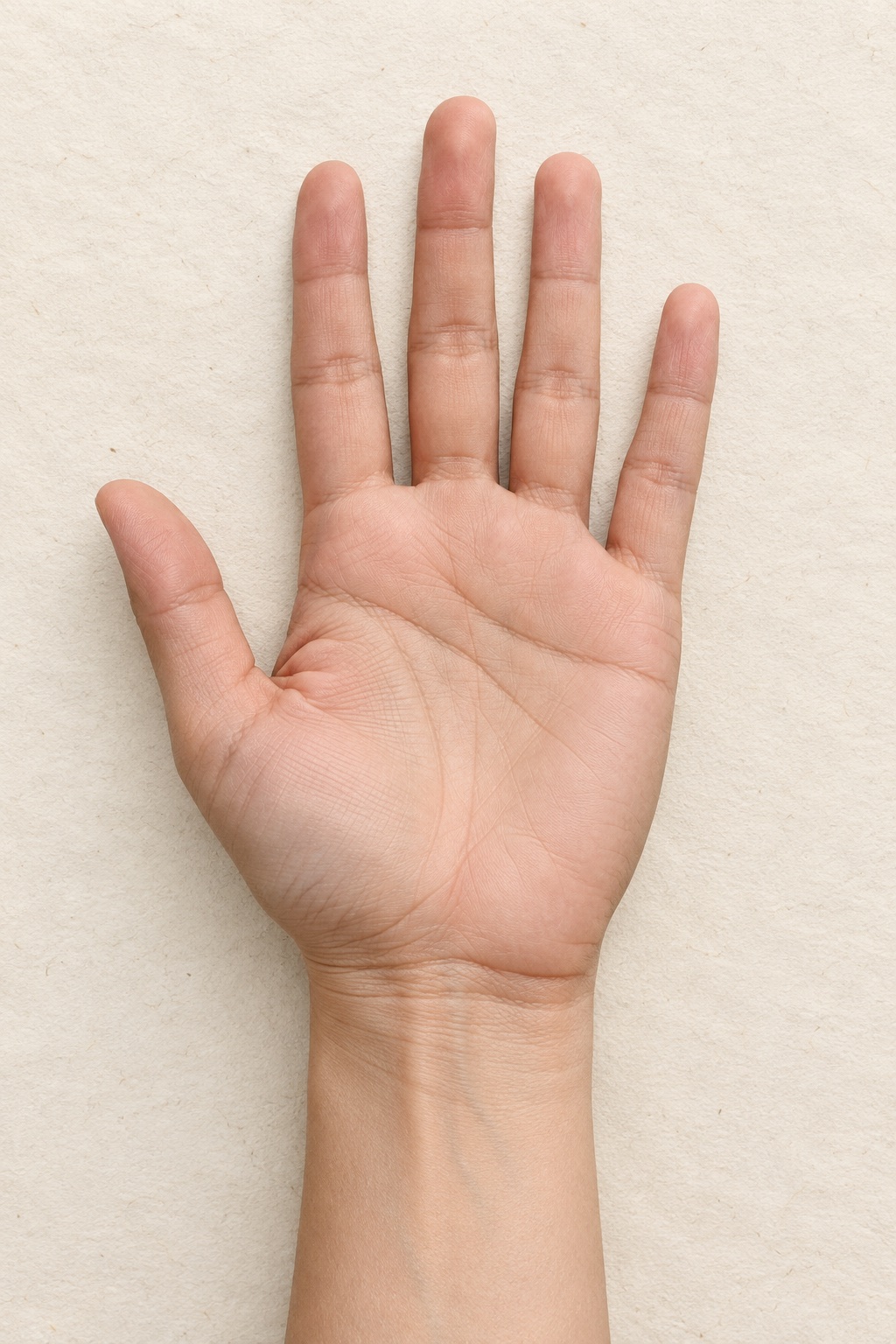
Keep the whole palm and the wrist boundary in frame, with the hand relaxed and open. Use soft, even light and focus on the palm. Retake photos with glare, blur or heavy sharpening. Diagrams show where to look; judge visibility from the original photo. Even clear creases cannot establish disease or future events.
Continue learning
Sources and conventions
- Cheiro, Palmistry for All (1916), a historical source for traditional palmistry names
- Chinese guide to palm lines and diagrams
- Palm-line location guide and downloadable charts
- Crosses, stars and identification limits
Updated October 8, 2026
Practice questions
Which lines should a beginner find first?
Start with the heart, head and life lines. This course uses fixed diagrams before moving to the fate line, Venus mount and small-mark shapes.
Does completing the practice let me predict the future?
Completion means you answered this course's location and identification questions correctly. It does not test predictive ability. Palm lines cannot establish lifespan or diagnose health.
What should I do with an unclear line?
Mark it unidentified. Check the original or retake the photo in soft, even light. This avoids mistaking glare, sharpening artifacts or diagram lines for your own creases.
How do mistakes and reviews work?
Missed questions return at the end and become due in ten minutes. Correct answers move to review intervals of one, three, seven days and longer. First-answer accuracy keeps the original result. You can return to due questions after completing the course.
Can I continue in the other language?
Both languages share progress, first-answer results and review dates in this browser. A different device or cleared site data starts a new record. Practice is free and needs no account.